Dog Dad Af SVG: A Real-World Embroidery Designer’s Take
Let’s be honest—I opened Dog Dad Af SVG expecting a playful, slightly cheeky nod to pet parenthood. What I found was something sharper: confident, clean, and surprisingly versatile for real embroidery work. As someone who’s stitched hundreds of custom designs onto sweatshirts, tote bags, baby onesies, and boutique aprons, I don’t just scan files—I assess how they’ll behave under needle, thread, and fabric. So here’s what Dog Dad Af SVG actually delivers—and where it shines (or needs careful handling) in live projects.
First Impression: Bold, Not Busy
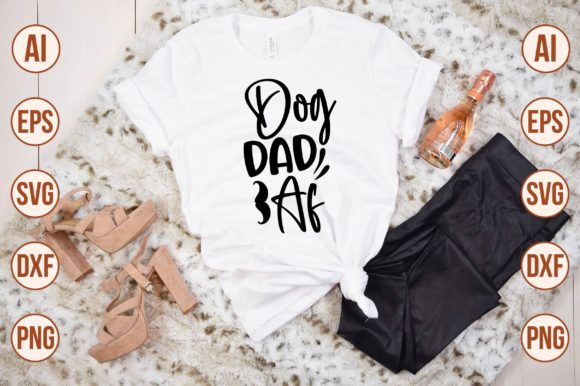
The moment you open the AI or EPS file, you notice the balance: strong central lettering (“DOG DAD”), compact layout, and that unmistakable “AF” tag tucked in with deliberate swagger—not cramped, not lazy. It’s not cartoonish or overly cutesy, which makes it ideal for adult-focused handmade products: think embroidered caps for dog trainers, minimalist pillow covers for modern nurseries, or sleeve patches on denim jackets sold at craft fairs. The vector foundation means scaling is predictable—no pixelation when resizing for a 4-inch hoop on a tea towel versus a 2-inch patch on a baby bib.
Where It Works Best—And Why
Dog Dad Af SVG thrives in projects where personality meets polish. I tested it as a machine embroidery design on midweight cotton twill for a small-batch line of embroidered tote bags—no applique, just satin stitch outlines and tight fill stitch for the letters. It held up beautifully: crisp edges, even density, zero thread nesting. Customers responded strongly to the tone—it felt authentic, not generic. That matters for Etsy sellers and small shop owners building brand voice through design assets.
It also translates well to sweatshirt embroidery. On a 9-oz fleece, paired with a medium-weight cutaway stabilizer, the design stayed flat and legible after three rounds of washing. The letterforms are generous enough to avoid thinning out on textured fabric, and the spacing between characters prevents “bleeding” when stitching dense fill areas. For holiday embroidery—say, a limited-run batch of dog-themed Christmas stockings—the design reads instantly, even from across a room.
As a digital embroidery file for baby embroidery? Use caution—but not dismissal. On a onesie, I’d place it center-chest, scaled to ~2.5 inches wide, and skip the “AF” if stitching for newborns (keep it sweet, keep it simple). For older toddlers or nursery decor like framed pillow covers? Absolutely. It adds character without overwhelming.
Where to Pause—and Test First
This isn’t a one-size-fits-all embroidery file. Its strength lies in clarity, but that also means it doesn’t forgive poor execution. Here’s where attention matters:
- Small hoop sizes: Below 3 inches wide, the “AF” detail risks becoming indistinct—especially with low-thread-count stabilizer or light tension.
- Stretchy fabric: On knits like t-shirts or raglan sleeves, use tear-away + light cutaway combo. The sharp corners demand stability—or they’ll pucker.
- Dark or textured backgrounds: The design relies on contrast. On charcoal fleece or linen-look tea towels, test thread colors first—navy or charcoal thread can vanish; bright white or mustard pops better than expected.
- Curved surfaces: Caps and beanies need re-digitized versions for optimal stitch laydown. This file is flat-surface ready—don’t assume it auto-adjusts for crown curvature.
- Frequent-wash items: Towels, baby blankets, and kitchen aprons need secure underlay and proper thread tension. Run a wash test before listing as a finished product.
Design Assets That Build Trust—Not Just Looks
What makes Dog Dad Af SVG more than just another graphics download? It supports professionalism. When customers see clean, consistent lettering on your embroidered patch or custom apparel, they subconsciously register care—not just speed. That builds trust, especially for creative entrepreneurs selling personalized gifts or boutique branding. I’ve used it in printable mockups for an Etsy listing: layered over a neutral sweatshirt photo, it looked like a cohesive product—not a clipart afterthought.
For craft business owners, its compatibility with Cricut, Silhouette, Inkscape, and Adobe means flexibility across production paths: cut vinyl for iron-on transfers, digitize for embroidery machines, or adapt for screen printing. But remember—compatibility doesn’t equal plug-and-play. Always inspect the DXF and EPS files for stray anchor points or overlapping paths before sending to your embroidery software.
Practical Notes Every Embroidery Designer Should Run Through
Before stitching your first Dog Dad Af SVG project:
- Test on scrap fabric *with your exact stabilizer and thread*—not just a swatch, but the same weight and weave you’ll use.
- Check stitch density in the “D” and “A” curves—overly dense fills can cause stiffness on lightweight fabrics.
- Confirm hoop size fits comfortably within your machine’s throat space, especially if adding borders or secondary elements later.
- Review small details in black-and-white mockups—what reads bold on screen may blur when stitched small.
- Compare light/dark fabric backgrounds using actual thread samples—not just RGB previews.
- Verify licensing terms before selling finished embroidered items or reselling the digital embroidery file—this is a Crafts category Graphics asset, not automatically commercial-use by default.
Bottom line: Dog Dad Af SVG isn’t filler. It’s a focused, functional design asset that earns its place in your embroidery project toolkit—if you treat it like one. Use it thoughtfully on sweatshirts, totes, patches, and holiday gifts, and it’ll reflect well on your craftsmanship, your brand, and the handmade product experience you deliver.